


Turning research into results
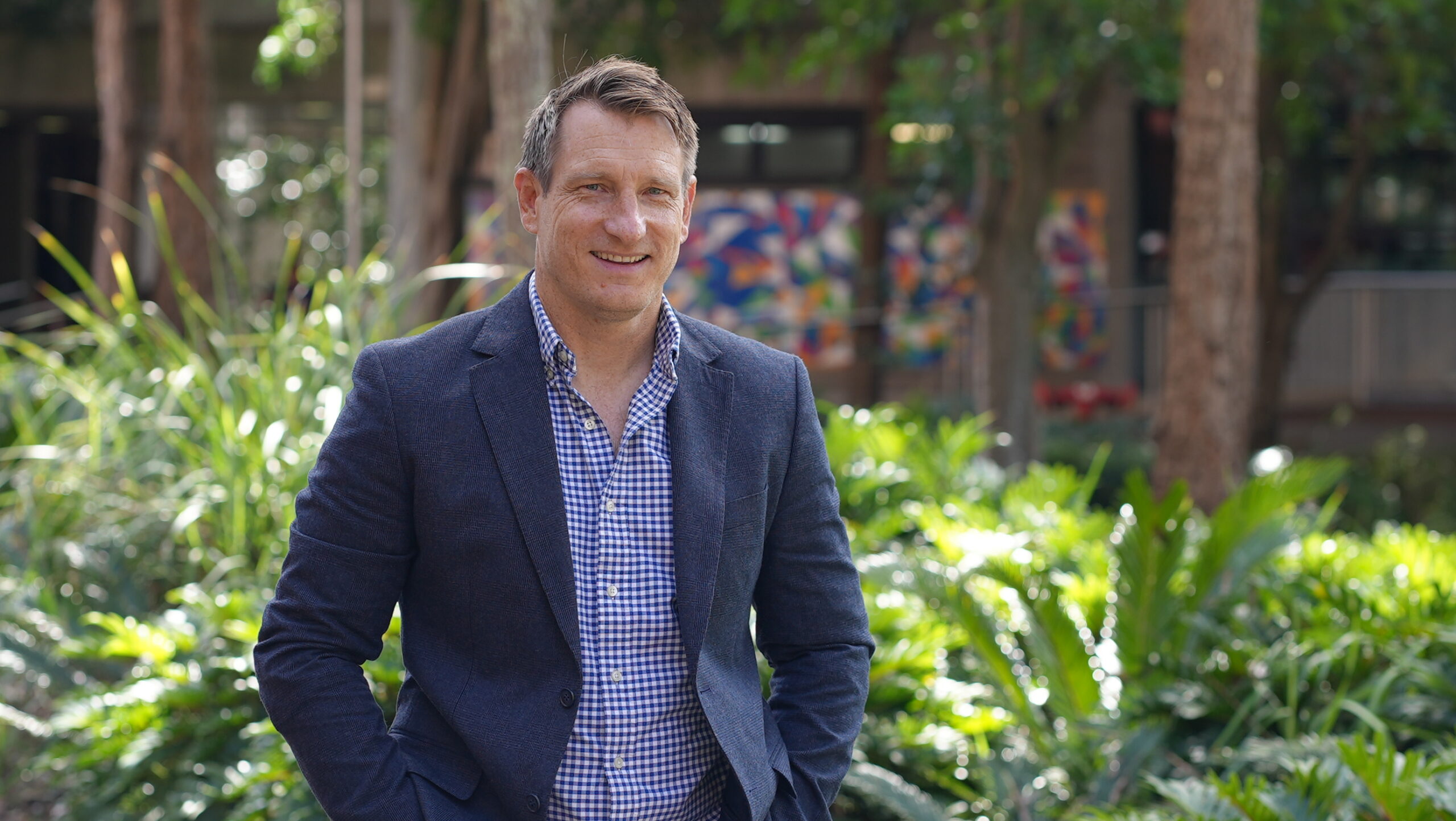
Considered one of Australia’s foremost experts on randomised controlled trials in education, Dr Drew Miller’s research strikes a balance between focusing on the numbers to build evidence and translating that evidence into making a difference in the lives of teachers and students.
Dr Drew Miller’s research career has been shaped by a motivation to help people understand the complexities of the world around them. Too often, says Drew, people want things reduced to the “simple view”.
“That can be counterproductive. Better outcomes are achieved by helping teachers to engage in the complexity of their work, understanding how simplified and complex learning activities should interact to offer the learner what they need, when they need it.”
That’s where he sees the role of randomised controlled trials (RCT) in education and the social sciences more broadly as critical in providing robust evidence that helps us understand the connection between teaching and learning. When combined with the stories and experiences of schools engaging in evidence-based practice we can develop understanding of what works, as well as how, why and under what conditions.
Quality practice across fields
Drew began his career as a physical education teacher before switching to a research career focused on gameplay for developing physical capabilities almost 20 years ago.
It was in the PE space that Drew conducted his first RCT. That number has grown to more than 15, and Drew is now considered one of the foremost experts in designing and conducting RCTs in Australian education.
This expertise in RCTs led Drew into research on pedagogy and professional development within the University’s Teachers and Teaching Research Centre.
Here he led the design and implementation of a five-year, $22M program of research funded by the Paul Ramsay Foundation exploring the impact of the Quality Teaching Rounds professional development program on students and teachers across Australia.
“It turns out that when you give teachers good quality professional development that helps teachers engage students in the right activity at the right time, you get improved practice and great outcomes for students.”
Building capacity for quality teaching in Australian schools
More than 1,400 teachers and 10,000 students across three Australian states participated in the program of research, which involved four RCTs, including the largest randomised controlled trial in Australian education research history in 2019.
The research demonstrated conclusively that teacher participation in Quality Teaching Rounds improved the quality of teaching and student achievement, with stronger results in disadvantaged schools.
“What we found, though, was that in those [disadvantaged] schools, there’s more things going on and implementing programs like Quality Teaching Rounds can be more complicated,” says Drew.
“And so we moved from evidence being about numbers on a screen and not knowing any of the students or teachers to understanding how we can help individual schools to implement well and achieve great things.”
Partnerships for sustained social impact
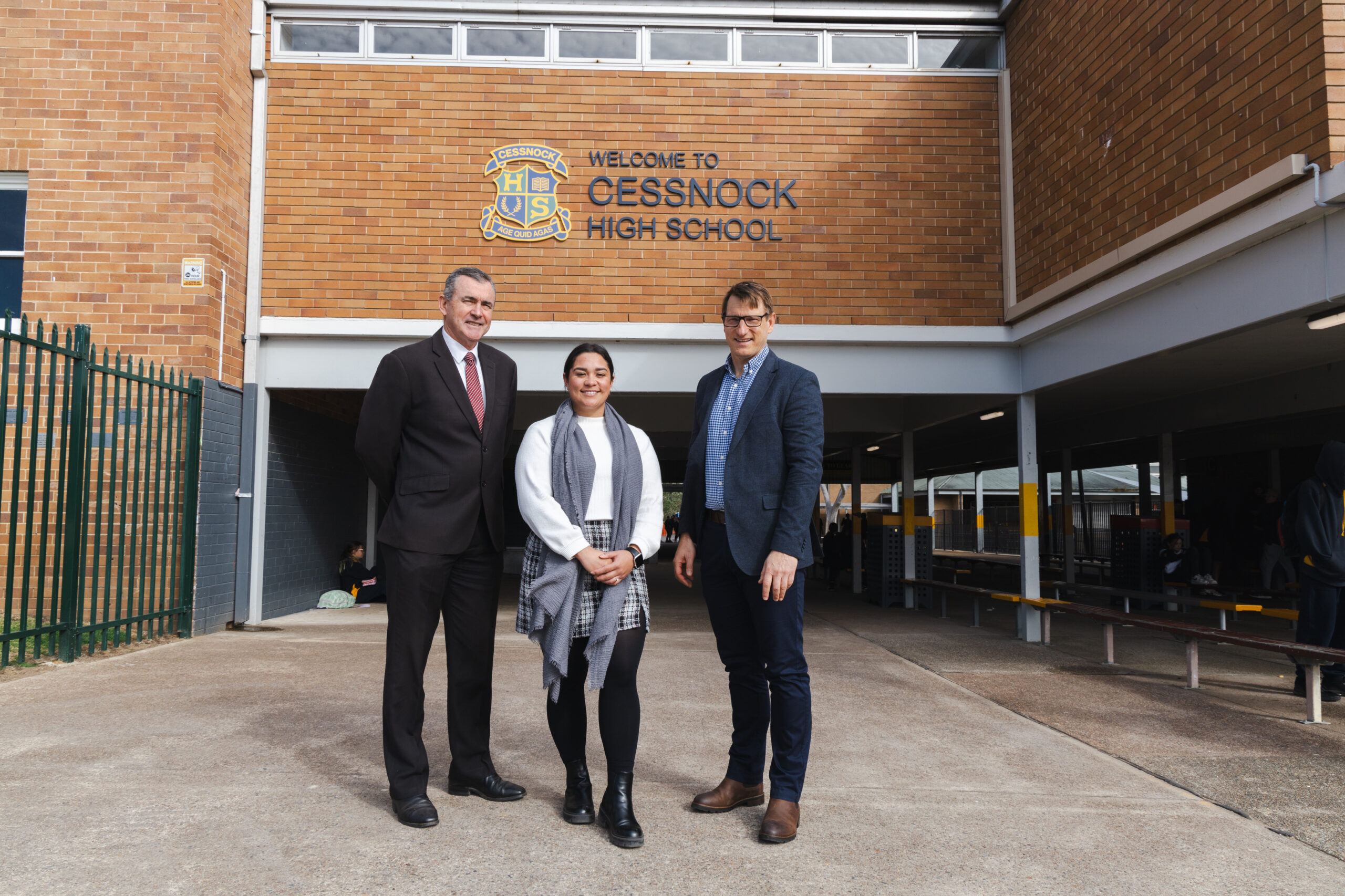
Peter Riley had only been principal at Cessnock High School for a couple of months when, in early 2020, he called Drew to ask whether Quality Teaching Rounds could make a difference at his new school.
Cessnock High has nearly 70 per cent of families in the lowest SES quartile and a quarter of students from Indigenous backgrounds. The school was struggling with attendance, engagement and behaviour, and teachers had adopted a welfare-centric stance ahead of a focus on academic achievement.
“We believed the key to turning things around was bringing staff together with a coherent, strategic focus on high-quality teaching, underpinned by the belief that all students are capable of learning,” says Drew.
“While we knew from a decade of research on Quality Teaching Rounds that we could have positive impact on teachers, teaching and student outcomes, we also knew that implementing anything new in low SES schools can be tough.”
Drew led the development of a Quality Teaching Action Plan with Peter and his leadership team that centred on engaging all teachers in Quality Teaching Rounds to build an ‘instructional core’ while simultaneously improving wellbeing and connectedness among staff. The school leadership team also worked hard to shift the culture of the school and its engagement with the community.
The results at Cessnock were remarkable.
In 2023, Cessnock High ranked first in the Hunter region and 11th in NSW for improvement in Year 7 to 9 NAPLAN results. That’s improved year-on-year, with Cessnock now seventh in the state.
Their HSC results improved more than 50 per cent in 2022 and 2023, and ranked second in the state for improvements in HSC scores in 2024. The school’s average mark moved from not achieving university entrance to direct entry into education, nursing and business programs.
Driving equity-focused change at scale
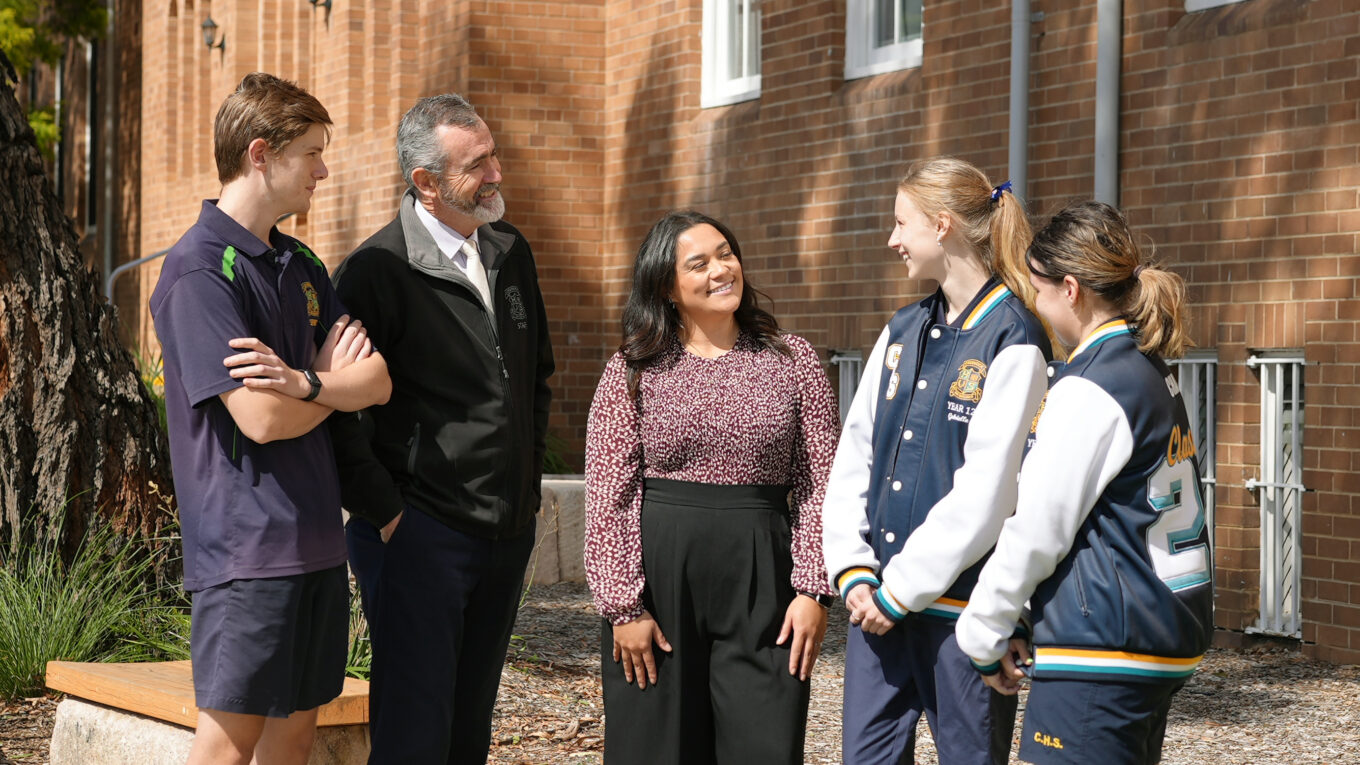
The Cessnock partnership model is now being scaled to benefit more than 8000 students in 20 of the most disadvantaged government schools in NSW. This Thriving Schools project has been funded by a $4.3M grant from the Paul Ramsay Foundation.
Drew’s plan is to scale this partnership model further, making an impact in the communities where inequity is experienced the most.
“Working with the inspiring teachers and principals at our Thriving Schools means we can scale the impact of the program to 20 other communities, which is a great start” says Drew.
“What we’d like to be able to do, is create a partnership program that we know in the majority of cases is going to have really transformative effects for the leaders, the teachers, and ultimately the students and communities in each of the schools we work with.”
“That means focusing on high-quality teaching, making teachers feel more valued, in control of their pedagogy, and understanding more of the complexities of their profession to ultimately get those great student outcomes.”
Turning research into impact
Today, Drew is the Deputy Director of the Teachers and Teaching Research Centre. It’s a centre renowned globally for its research and impact.
“We have built a centre where we do things a little bit differently and our focus is not just on producing high quality evidence, but also being able to have impact using that evidence at scale,” says Drew.
“It’s the way we move information through the Centre. It’s the way we can feed data back to schools. It’s the way that we have focused on telling really important stories about the schools. It’s also been in moving to that political space and engaging with policy makers and broader audiences.”
What matters most of all, according to Drew, is seeing the positive impact of the Centre’s work in the lives of the teachers and students who have been involved in his research.
“We’re really lucky to be in a space where we can have impact on large numbers of students through multiple programs, which is just unreal. But while all that is worth celebrating, there is a lot more to be done.”
