


More than a workplace: Danebank builds community through QTR
Key Points
-
Danebank Anglican School for Girls is a supportive, trusting learning community where students love learning and teachers feel genuinely valued and connected.
-
By introducing QTR, the school has created intentional, evidence-informed opportunities for teachers to collaborate across faculties and career stages.
-
Teachers describe participating in QTR as “a beautiful way to build new relationships.”
-
As more staff take part, QTR is becoming embedded in school life, strengthening collaboration and supporting sustains improvement in teaching and learning.
Talk to any teacher at Danebank, and one thing is clear: this is more than just a school, it’s a community.
At Danebank Anglican School for Girls, a shared passion for learning runs through every classroom. Students are eager to learn, and staff are equally committed to growing their practice. Professional learning is not an add-on here. It’s part of the culture.
For Lisa Larkin, a Year 3 teacher with nine years’ experience, that sense of belonging is hard to put into words: “The community, the girls – you don’t get the same feeling anywhere else. They want to be here; they want to learn… It’s a joy to teach them.”
It’s not only the students who make her love her job. It’s the way the staff are supported to grow. “To be valued as a staff member and for the school to want you to be doing better within your career – that’s really nice.”
Jessica Duggan, who began her teaching career at Danebank seven years ago, shares the sentiment.
“There’s a lot of trust here, and the girls are beautiful learners as well, so they make it really hard to [want to] go anywhere else. They’re willing to let you try and fail and try and succeed at various teaching and learning strategies, and they really embrace the risks that you take.”

One school, two campuses, and a shift in thinking
Danebank is a vibrant Pre-K to 12 school with over 1,000 students and more than 120 teaching staff, which recently celebrated 90 years at its Hurstville campus. Although located on one site, opportunities for collaboration between the junior and senior schools were once limited. Even faculties within the senior school operated independently, with a focus on their specific disciplines.
Director of Teacher Practice, Emma Pay, explains: “The faculties had really great practice within their own area of the school and so we wanted to increase and leverage cross-faculty collaboration.”
But this was not a culture they were stuck in. Staff were open to change and actively looking for structures that would allow collaboration to happen deliberately, not just incidentally.
QTR: A framework for change
Danebank began implementing Quality Teaching Rounds (QTR) in 2022, starting with a small pilot group.
Emma was familiar with the Quality Teaching (QT) Model, even rediscovering an original copy of the model in her drawer from 20 years ago. What appealed most, though, was how QTR brought the model to life in a clear and practical way. The structured process of QTR gave teachers a way to operationalise the model’s shared language for reflecting on and refining their practice.
“Having a process that allows you to actually look at how the Quality Teaching Model has been implemented was really appealing.”
What stood out most was the deliberate focus on trust and respect. Teachers observe lessons, but the discussion focuses on the lesson, not the teacher. Personal judgement is deliberately removed, creating a safe space for genuine professional growth.
Throughout Danebank’s first year of QTR, they chose to focus on building trust, encouraging classroom visits, and creating collaborative practices across faculties and career stages.
At the same time, the school was developing its own approach to learning, focused on building strong learning dispositions in students. At first, there were concerns that the two frameworks might compete. Instead, they found they strengthened each other.
“We had these learning dispositions that we want students to develop, but the Quality Teaching framework gave us a clear picture of what that looks like in teaching.”
Rather than two separate approaches, they became complementary. They even shaped professional reading discussions that connected directly to the school’s broader learning goals.
Transforming practice through reflection and dialogue
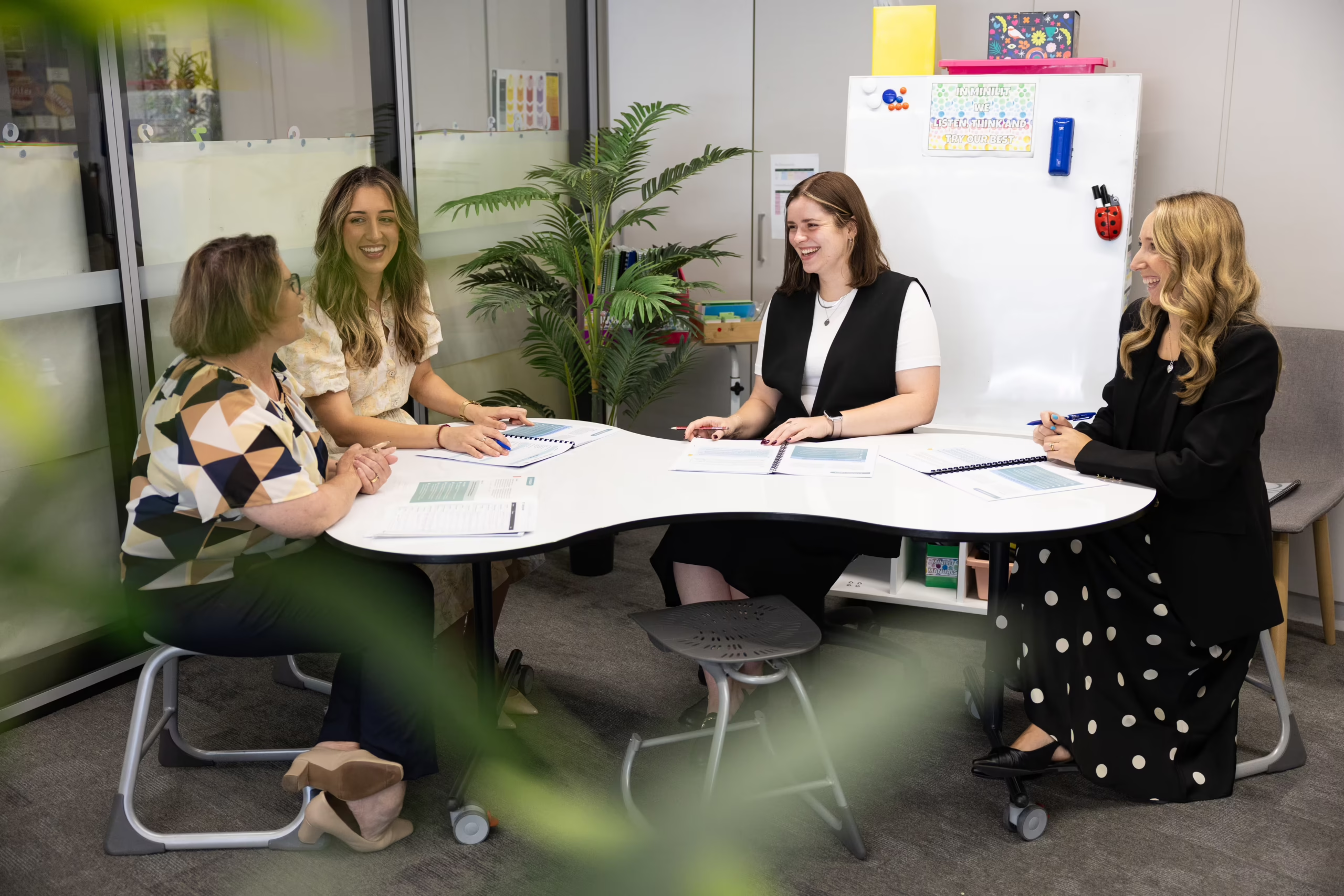
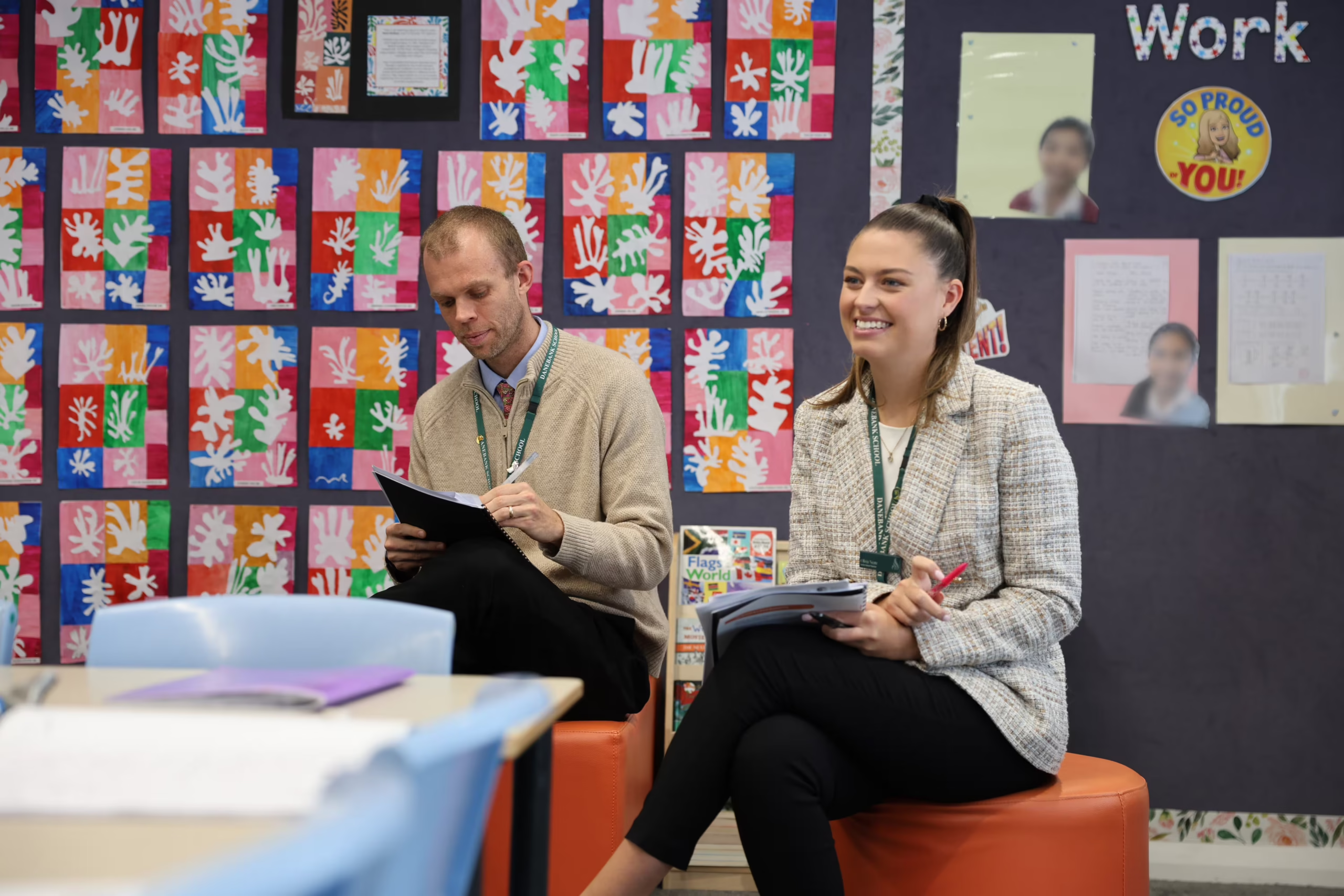
Across the school, teachers describe a stronger culture of reflection, professional dialogue, and opportunities to learn from practice beyond their own classrooms since the school began engaging in QTR.
Jessica, who was part of one of the first QTR groups, says the structured professional conversations were transformative. She valued the rigorous discussions and being able to challenge one another, while also accessing meaningful feedback and being able to adapt what she saw in other classrooms into her own practice.
“It made me realise that some things come naturally, but there are areas where I can be more intentional.”
Lisa describes how QTR changed how she plans and reflects on her teaching: “I did reflection well beforehand, but now I’m doing it with purpose. I now have something I can refer back to. I understand why the lesson worked. Because it was explicit. Because it used narrative. Because that really works for our girls.”
For long-term staff, QTR has also been a powerful way to see student growth across time. Lisa recalls observing former students now in Year 12 and feeling deeply proud of how far they had come.
Jaimey Thomas, the Head of Learning Enrichment, joined Danebank from the UK at the beginning of 2024. Observations are a normal part of performance and accountability processes in the UK, and so while she was used to adults regularly coming into the classroom, she was surprised by how different QTR felt.
“It inspires people and really helps develop their confidence in a low-threat environment,” she explains. “The structure is very carefully designed to make sure that people don’t feel attacked.”
Building relationships beyond the classroom
From the very beginning, Danebank’s goal was to build collaborative practice, not just within departments but across the whole school.
QTR has never been compulsory, yet the school has never been short of volunteers. Jessica and Lisa have both participated in multiple Rounds, both as participants and facilitators. To date, 46 staff have completed at least one round, with the long-term goal of whole-school participation.
But the impact they talk about most is not technical – it’s relational.
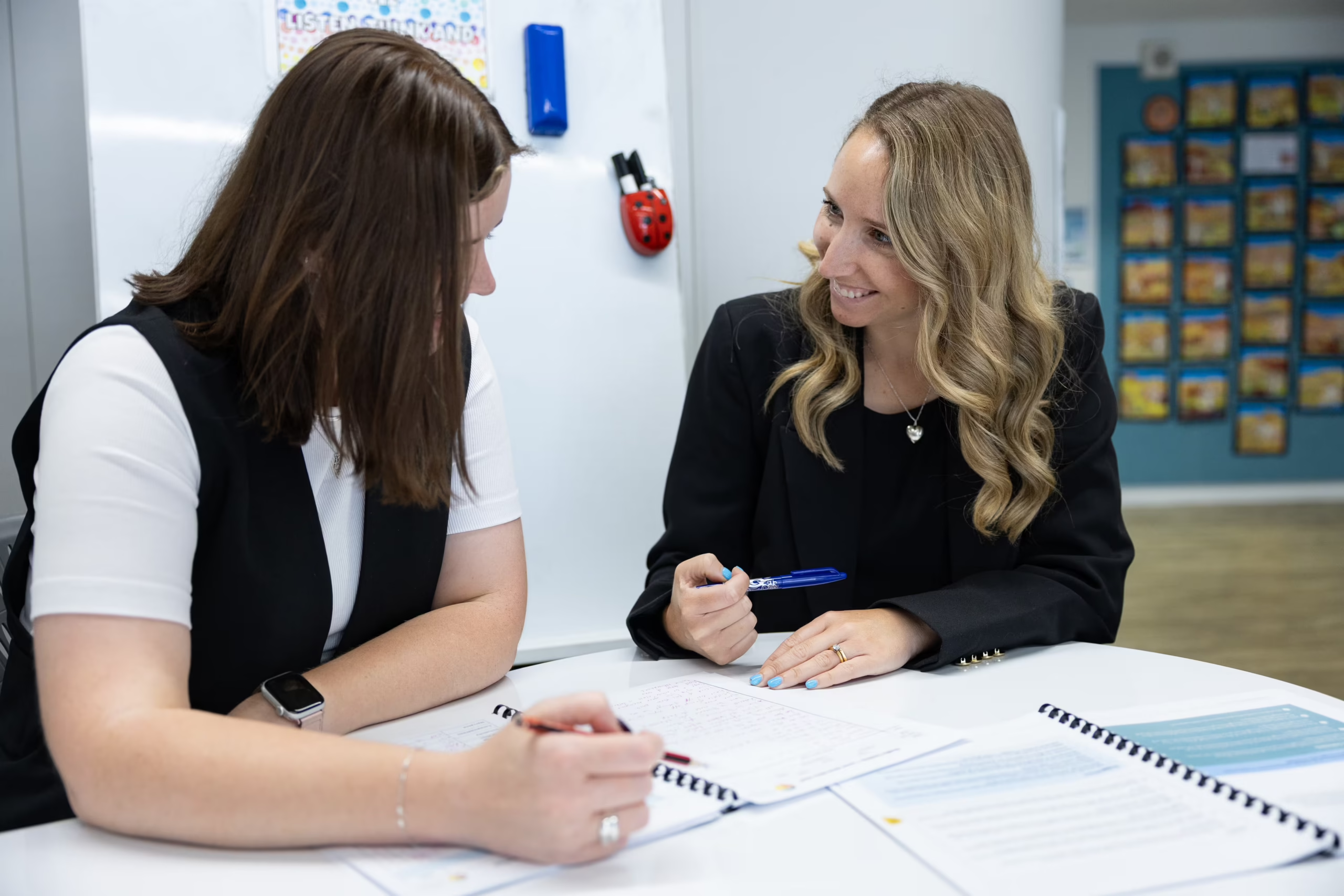
Teachers who once may never have crossed paths now greet each other in the corridors. They feel comfortable stepping into each other’s classrooms. The idea of an open door no longer feels unrealistic; it feels normal.
“That might sound like a really small thing,” says Emma, “but in a big school, it’s really important.”
Lisa describes it simply: “It’s a beautiful way to build new relationships.”
In a school that already valued community, QTR has helped strengthen those connections and make collaboration a more natural part of everyday practice.
—
Quotes have been edited for length and clarity.
